


Daily Bubble
4.94.63K Reviews
App Specs
- Version
- 1.0.72
- Updated On
- License
- Free
- Downloads
- 10,000,000+
- Developer
- Big Cake
- Categories
- Puzzle
- Platform
- Android
Screenshots
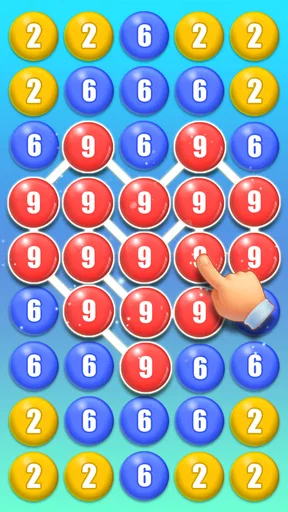
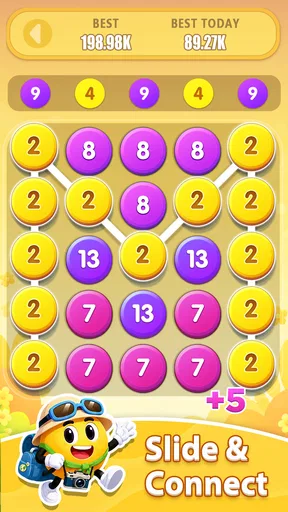
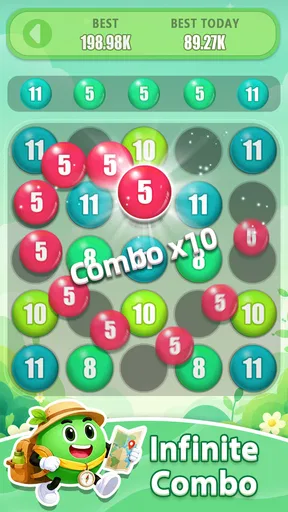
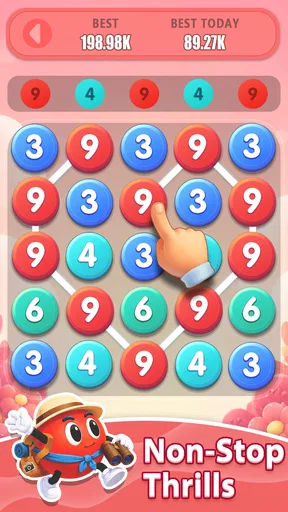
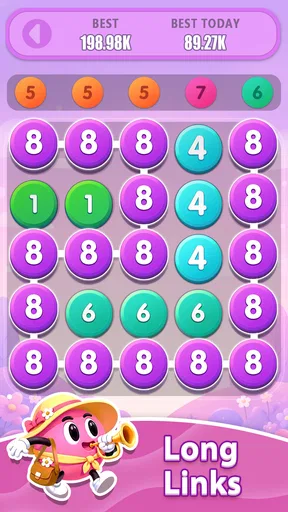

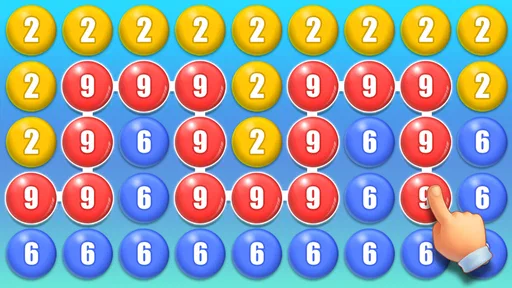
 Analysis by AppCompare
Daily Bubble is the kind of puzzle game I open when I want a small, uncomplicated break rather than a demanding challenge. Its central idea is easy to understand: combine bubbles, clear space, and keep the board moving in a satisfying rhythm. That simplicity is its greatest strength, but it also sets a clear expectation. This is not a story-driven adventure or a deep strategy game. It is a casual bubble-merging experience built around quick decisions, visual order, and the pleasant feeling of turning a crowded board into a cleaner one.
After spending time with it, I found the game most convincing when I treated it as a short-session companion. It works well while waiting for an appointment, taking a brief pause from work, or winding down before bed. The free entry point makes it easy to try, and its Everyone content rating keeps the tone broadly accessible. Big Cake has aimed for a welcoming puzzle format rather than a complicated system, and that focus comes through in the way the game presents its main activity.
My main recommendation is simple: choose Daily Bubble if you enjoy calm, repeatable puzzle actions and like improving your decisions one board at a time. Skip it if you need a strong narrative, competitive depth, or a constant stream of dramatic surprises. The game knows what it wants to be, and its success depends on whether that modest goal matches your idea of fun.
Daily Bubble review: a gentle puzzle built for short breaks
I’ll look at what makes Daily Bubble work as a short-break puzzle, from the ease of getting started to the small choices that give its merging loop a bit of depth. I’ll also consider where that focused design starts to feel limited, so you can judge whether its quiet, repeatable style suits the way you like to play.
The first few minutes make the purpose clear
The first impression is deliberately light. Daily Bubble does not need a long explanation before the basic loop becomes understandable. The bubble pieces, the merging idea, and the need to manage available space communicate the essentials quickly. I appreciated that directness because it lets me start playing without studying a complicated rule set or learning a large collection of special abilities.
That accessible opening also reveals the game’s limitation early. Once the initial novelty fades, enjoyment comes from making slightly better choices rather than discovering a radically different mode of play. The appeal is in the repeated act of spotting useful combinations, planning around the next move, and avoiding a board that becomes difficult to control. Players who like gradual mastery can find a comfortable routine here, while anyone looking for constant mechanical escalation may find the experience too restrained.
The game is free to download, which makes the decision to test it straightforward. Optional in-app purchases range from $1.99 to $59.99 per item, so I would approach spending with a little care. The free experience is the sensible starting point: play enough sessions to decide whether the merging loop genuinely relaxes you before considering any purchase. A larger price option can feel unnecessary in a game whose main value comes from a compact, repeatable activity.
Worth Reading Before You Choose

EA SPORTS FC Mobile 26 Is a Bigger Football Game, but It Takes Time

Flipboard Shows What News Apps Must Do Beyond the Feed

Switching to Android Auto Means Rethinking Your Driving Routine

Google Calendar Makes a Crowded Week Easier to Manage

Ludo King Makes the Most of the Minutes Between Plans

Baby Panda World Brings Quick Play to Modern Phones, but Its Game Library Feels Busy
Who will feel at home with this design
I see Daily Bubble fitting three kinds of players particularly well. The first is someone who enjoys familiar puzzle rules and does not want to invest in a lengthy campaign. The second is a player who prefers visual tidying and incremental progress over fast reflexes. The third is a casual mobile user who wants something that can be understood in moments and put down without losing the thread of a complicated story.
It is also a reasonable choice for families looking for a broadly approachable puzzle, since the age rating is Everyone. That does not mean every player will enjoy it equally. Younger users may like the colorful objects and immediate feedback, while older puzzle fans may want more demanding planning. I would not choose it as my main game if I wanted a rich challenge that kept expanding over many hours.
Daily Bubble has passed the ten-million-install mark and holds a 4.9 average from around 68 thousand ratings, which suggests that its straightforward format has found a large audience. I would not treat popularity as proof that it will suit every player, but it does make the game easier to place: this is a polished casual puzzle concept aimed at broad appeal, not an experimental niche title.
A visual language based on order and softness
The art direction supports the game’s central pleasure: seeing separate pieces become organized into more useful arrangements. Bubbles are naturally readable objects, so the visual language does not have to work hard to explain what matters. Their rounded forms and bright presentation make the board feel approachable, while the act of merging gives the screen a sense of visual cleanup.
That matters more than it might seem. In a puzzle built around repeated combinations, the board can easily become visually tiring if every object competes for attention. Daily Bubble’s bubble-based identity keeps the scene coherent because the pieces belong to the same simple visual family. I can focus on relationships between objects instead of decoding a collection of unrelated symbols.
The setting is intentionally modest. There is no need for a large fictional world when the board itself is the place I am meant to read. The game’s “world” is expressed through color, shape, spacing, and the gradual transformation of the play area. This gives the experience a toy-like quality: I am not visiting a detailed location, but I am interacting with a little visual system that responds to my choices.
Why the presentation helps, and where it may feel thin
The clean bubble theme helps reduce mental friction. When I return after a break, I do not need to remember a plot, a character relationship, or a collection of special rules. I can look at the board and immediately begin evaluating the available possibilities. That makes the presentation unusually well matched to short sessions.
The trade-off is that the same restraint can make the game feel less memorable than puzzle titles with distinctive characters or a stronger setting. If you judge a mobile game by its world-building, Daily Bubble will seem sparse. Its atmosphere comes from the tactile idea of combining objects, not from a narrative environment. I consider that a deliberate choice rather than a flaw, but it narrows the audience.
One useful way to play is to treat the colors and shapes as information rather than decoration. Before making a quick merge, I take a moment to scan the whole board and identify which areas are becoming crowded. This small pause often produces better results than reacting to the most obvious pair. It also makes the art direction part of the strategy: the clearer the board feels, the easier it is to notice a move that protects future space.
Sound, rhythm, and the feeling of a completed move
The game’s mood depends heavily on rhythm. Bubble merging naturally creates a sequence of small actions: inspect, choose, combine, reassess. That cycle gives Daily Bubble a gentle tempo, even when I am making several decisions in quick succession. The experience feels more like maintaining a flow than surviving a frantic test.
I found that pacing especially useful during ordinary breaks. For example, if I have only a few minutes before leaving home, I can start a session without worrying that I am entering a long cutscene or a complicated mission. I can focus on the board, make a handful of moves, and stop when the break is over. The game’s structure suits interruption because its core activity is self-contained.
The sound design, where present in the play experience, works best when it reinforces that sequence rather than competing with it. A merge should feel like a clear response to my decision, while the overall audio mood should leave room for concentration. Daily Bubble is strongest when its presentation stays subordinate to the board. I do not want loud spectacle distracting me from the one thing that matters: understanding how the next combination changes my options.
There is also a practical benefit to this restrained rhythm. Players who find fast arcade games stressful may appreciate having time to inspect the situation. Conversely, if you need strong musical progression or dramatic audio cues to stay engaged, the calm approach may not provide enough momentum. The game’s sound and pacing are designed to support repetition, not to create a cinematic event.
How the mechanics fit the mood
The merging mechanic and the visual atmosphere support each other naturally. Combining bubbles is both the rule of the game and the source of its emotional payoff. Each successful action reduces confusion, creates a more advanced object, or opens a new possibility. That connection makes the board feel responsive without requiring a large set of systems.
The most important skill is not speed. It is space management. I get better results when I resist the urge to make the first convenient combination and instead consider whether that move will leave useful room for later pieces. This is one of the game’s more rewarding trade-offs: a move that looks immediately satisfying may be less valuable than a quieter choice that keeps the board flexible.
Another practical habit is to separate “progress” from “cleanup.” Sometimes the best move is the one that creates a larger bubble; at other times, clearing a congested area is more important because it prevents future choices from becoming cramped. Thinking in those two categories gives the simple system more depth than the store summary suggests. It is not a complex strategy game, but it does reward a player who looks beyond the next merge.
I also recommend avoiding automatic play patterns. If I always combine the nearest available bubbles, I can accidentally remove the arrangement that would have supported a stronger sequence. A brief scan from one side of the board to the other helps me notice alternatives. This is a small technique, but it turns the game from passive tapping into a more deliberate puzzle routine.
Progression without overwhelming the player
Daily Bubble’s appeal is tied to how little preparation it requires. I do not need to memorize a long list of character abilities or understand a complicated upgrade tree before the board becomes enjoyable. That makes it friendlier than many puzzle alternatives that surround their core mechanic with layers of progression.
However, this simplicity can also limit long-term motivation. Players who enjoy unlocking new worlds, collecting elaborate tools, or chasing highly varied objectives may eventually want more variety than this format provides. I would compare it with traditional match-style games in that respect: those alternatives may offer more visible progression and event-driven goals, while Daily Bubble is more focused on the immediate satisfaction of merging.
Compared with a physics-based bubble shooter, the experience also asks for a different kind of attention. A shooter emphasizes aiming, angles, and timing. Daily Bubble is better suited to players who prefer arranging and combining rather than firing at a target. Compared with a classic match-three game, it feels less dependent on scanning a grid for chains and more concerned with the consequences of keeping the board open.
That comparison helps answer an important question: is Daily Bubble better than the usual alternatives? Not universally. It is better for a player who wants a softer, less reflex-heavy bubble puzzle with a clear central action. A match-three game may be preferable if you want cascading combos and frequent visual explosions. A bubble shooter may be preferable if aiming is the part you enjoy. Daily Bubble earns its place by keeping the focus on merging and board control.
Device expectations and everyday convenience
The current version is 1.0.72, and the game supports devices running Android 6.0 or later. That makes it accessible to many users with older Android hardware, although actual comfort will still depend on the condition and screen of a particular device. I would be comfortable recommending it to someone who wants a lightweight-feeling casual puzzle, but I would still keep expectations realistic: broad system support does not turn every older phone into a perfect gaming device.
For everyday use, the strongest workflow is to keep sessions intentional. I might play a few boards during a commute, use it as a mental reset between tasks, or open it when I want stimulation without the commitment of a larger game. The bubble theme and steady pace make it easy to return to, but that convenience can become a weakness if I start playing automatically whenever I have a spare second. Its design encourages repetition, so setting a natural stopping point helps keep the experience relaxing.
Because the game is free with optional purchases, I would also decide in advance whether I am comfortable with spending. The most sensible approach is to enjoy the basic loop first and treat purchases as optional rather than necessary. If the core merging activity already feels repetitive after a few sessions, buying more content or advantages is unlikely to solve the underlying mismatch.
Where the game loses momentum
The biggest limitation is variety. Daily Bubble has a clear identity, but a focused identity can become narrow. Once I understand the main decision pattern, the challenge depends on how much pleasure I get from repeating and refining it. That is satisfying for some players and insufficient for others.
The game may also disappoint users who want a strong sense of destination. There is no reason to expect the bubble board to provide the emotional investment of a story campaign, and I would not recommend it to someone choosing games mainly for characters, exploration, or world-building. Its setting is an atmosphere around the puzzle, not a separate place to investigate.
There is a similar issue with competitive players. A high average rating and a large player base show that many people enjoy the format, but those figures do not change the fact that Daily Bubble is primarily a personal puzzle experience. If your motivation comes from direct competition, ranked matches, or social coordination, another category will probably serve you better.
My final atmosphere verdict
Daily Bubble succeeds because its art direction, sound, and pacing all point toward the same goal: making bubble merging feel calm, readable, and repeatable. The presentation does not distract from the mechanics, and the mechanics give the visual theme a clear purpose. I come away with the feeling of having performed a small act of digital tidying, which is exactly the kind of mood this game appears to pursue.
Big Cake has kept the design approachable enough for a broad audience, and the Everyone rating supports that impression. At the same time, the game is not universally suited to every puzzle fan. Its free format is easy to sample, but the optional purchase range means I would avoid spending until I knew the repetition genuinely worked for me. The right question is not whether it contains a huge amount of content; it is whether the central bubble loop remains pleasant after the first few sessions.
For me, the answer is yes, within limits. I would recommend it as a quiet break, a low-pressure puzzle, or a simple way to exercise planning without committing to a demanding game. I would not make it my first choice for narrative, competition, or deep mechanical variety. Daily Bubble is at its best when you want a small, orderly pocket of play rather than a grand mobile adventure.
Its 4.6 thousand reviews and around 68 thousand ratings reflect a strong reception, while more than ten million installs show how widely the concept has traveled. Those figures are useful context, but my personal verdict comes from the mood of the play itself: clear bubbles, measured decisions, and a rhythm that is easy to enter and easy to leave. If that sounds like the kind of pause you need, this bubble merge puzzle is worth trying for free.
Pros
- Simple bubble-shooter gameplay that is easy to learn
- Short levels fit well into quick breaks
- Bright visuals make the game pleasant to play
- Daily challenges add a reason to return regularly
- Works well for casual players of different ages
Cons
- Progress may feel repetitive after extended play sessions
- Some levels can depend heavily on lucky bubble layouts
- Ads may interrupt the gameplay experience
- Limited depth for players seeking complex strategy
- Extra moves or boosters may require in-app purchases
FAQs for Daily Bubble
What is Daily Bubble and how does the game work?
Daily Bubble is a casual bubble-shooter game designed for short, relaxing play sessions. You aim and match bubbles of the same color to clear them from the board, complete objectives, and progress through levels. The game is easy to understand at first, although later stages usually require more careful aiming, planning, and efficient use of available shots.
Is Daily Bubble free to download and play?
Daily Bubble can generally be downloaded and played without an upfront purchase, making it accessible to players who want a simple puzzle game. However, free games may include advertising, optional in-app purchases, or both. These extras can provide boosters, additional attempts, or other conveniences, so it is worth checking the store listing and purchase settings before allowing children to play.
Does Daily Bubble require an internet connection?
The basic bubble-shooting gameplay may be available without a constant internet connection, which is useful when traveling or playing in places with limited signal. Nevertheless, some features can depend on connectivity, including advertisements, analytics, cloud synchronization, updates, rewards, or special events. Availability may also differ between Android and iOS versions, so offline behavior should be tested on your device.
Are there advertisements or in-app purchases in Daily Bubble?
Players should expect that Daily Bubble may use advertisements or optional purchases as part of its free-to-play model. Ads can appear between levels or when you choose to receive an extra reward, while purchases may offer coins, boosters, lives, or other helpful items. Before downloading, review the official store information and configure parental controls if younger users will access the game.
Is Daily Bubble suitable for children and casual players?
Daily Bubble is generally suitable for casual players because its controls are straightforward and the core gameplay is based on matching colors rather than complicated rules. It can be enjoyable for quick breaks and does not require long sessions to understand. Parents should still check the listed age rating, advertising content, privacy details, and purchase options before installing it for a child.


